
National Parks & Nature Reserves: Building an Unmanned Monitoring Network for Fire Prevention and Anti-Poaching
Vast, remote, and untamed—national parks and nature reserves are invaluable natural treasures. However, their sheer scale and inaccessibility present monumental security challenges. Park rangers and conservation officers face the twin threats of devastating wildfires and sophisticated illegal poaching, often with limited resources and manpower. Patrolling thousands of acres is a logistical and financial nightmare, leaving huge areas unmonitored and vulnerable.
Traditional surveillance methods are simply not viable. There’s no power grid to plug into and no Wi-Fi infrastructure for data transmission. This is the critical gap where modern technology must step in. As an engineer who has spent over a decade designing off-grid security systems, I’ve seen firsthand how 4G solar security cameras are revolutionizing conservation efforts, creating a resilient, unmanned monitoring network that serves as a digital shield for our wilderness.
How 4G Solar Cameras Create a Digital Shield for Nature
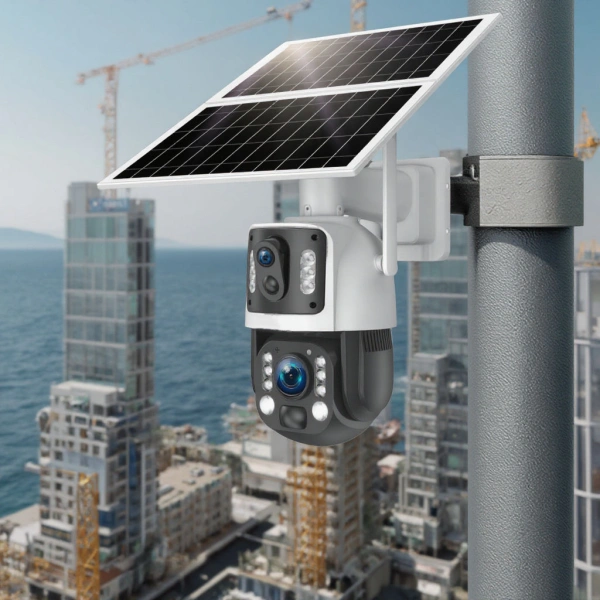
At its core, a 4G solar camera is a self-sufficient surveillance unit, perfectly engineered for remote deployment. It integrates four key technologies: a high-efficiency solar panel, a long-lasting battery, a professional-grade camera sensor, and a 4G LTE modem for wireless data transmission. This combination makes it the ideal solution for environments where traditional power and internet are non-existent.
The system’s autonomy is its greatest strength. The solar panel continuously charges the internal battery during daylight hours. This power is managed by a sophisticated Battery Management System (BMS), a critical technology we specialize in. A well-designed BMS, like those in our cameras, protects the battery from overcharging and over-discharging, ensuring stable performance through cloudy days and harsh temperature swings, which is vital for long-term reliability. For a deeper dive into this key technology, explore our guide on how BMS protects solar security cameras.
When the camera’s passive infrared (PIR) sensor detects motion—be it a person, a vehicle, or an animal—it instantly wakes up and begins recording. That footage is then transmitted over a 4G cellular network directly to a command center or a ranger’s smartphone. This provides real-time situational awareness, turning a reactive-patrol model into a proactive, alert-driven one. It’s a fundamental shift from wondering what happened to seeing it as it happens.
Traditional Patrols vs. 4G Solar Camera Network: A Core Comparison
For park managers, wholesalers, and security installers, understanding the operational advantages translates directly to budget efficiency and improved outcomes. The contrast between traditional methods and a technology-driven approach is stark.
| Feature | Traditional Human Patrols | 4G Solar Camera Network |
|---|---|---|
| Coverage & Scalability | Limited by personnel, terrain, and time. Very difficult to scale. | Scalable to hundreds of units, providing 24/7 coverage of critical chokepoints, perimeters, and vast areas simultaneously. |
| Response Time | Delayed. Incidents are often discovered hours or days later. | Instant. Real-time alerts are sent to authorities the moment an event is detected. |
| Operational Cost | High and recurring (salaries, vehicles, fuel, maintenance). | Primarily a one-time capital investment with low ongoing costs (data plan). Significant ROI over time. |
| Data Collection | Manual, anecdotal, and inconsistent. | Automated, time-stamped video evidence and metadata. Provides actionable intelligence and legal proof. |
| Deterrent Effect | Limited to the immediate presence of a patrol. | High. Visible cameras act as a powerful psychological deterrent to potential poachers and trespassers. |
Case Study: The “Ridgeback Reserve” Anti-Poaching Initiative
To illustrate the impact, let’s consider a real-world scenario adapted from one of our partners’ projects.
Problem: Ridgeback Reserve, a 300,000-acre protected area, was experiencing a surge in rhino poaching. Poachers used remote trails to enter and exit undetected. Ranger patrols were spread too thin, often finding evidence of a kill days after the fact, with no leads.
Solution: A security engineering firm, using UBOXCAM as their OEM partner, deployed 80 of our S10 4G Mini Solar PTZ Cameras. These were strategically placed at trailheads, water sources, and known poaching routes. The cameras’ AI was configured to specifically detect human figures while ignoring animal movement, drastically reducing false alarms. When a person was detected in a restricted zone after hours, an instant alert with a video snapshot was sent to the anti-poaching unit’s command center.
Result: In the first six months, the system generated 12 actionable alerts that led to the successful interception of poaching teams. The presence of the cameras became known, and reported poaching attempts in the monitored zones dropped by over 90%. The high-resolution video evidence was crucial in securing convictions. The reserve’s management calculated a 60% reduction in surveillance-related operating costs compared to their previous patrol-heavy strategy.
Deployment & Troubleshooting for Remote Environments
Deploying technology in the wild comes with unique questions. As engineers, we’ve solved these problems through robust design and smart planning.
- What if there’s no sunlight for several consecutive days?
This is a primary concern. Our solution lies in oversizing. We design our systems with high-capacity lithium batteries and efficient solar panels that can fully charge in a single day of good sunlight. A fully charged battery can power the camera in standby mode for up to several weeks, ensuring it outlasts any storm or stretch of cloudy weather. - How durable are these cameras against animals and harsh weather?
Our cameras are built for the outdoors. An IP66 or higher weatherproof rating is standard, certifying protection against heavy rain, dust, and wind. The housings are made of durable, UV-resistant materials. For areas with curious wildlife like bears, we can provide reinforced mounting brackets or protective enclosures. - What if the cellular signal is weak?
This is a common challenge in remote areas. Our 4G cameras are engineered with high-gain antennas to maximize signal reception. Before a large-scale deployment, a site survey is essential to map carrier coverage. For fringe areas, using a camera that supports an external, directional antenna can often capture a stable signal. This is a key difference between a consumer-grade product and a professional long-range solar security camera. - How do you manage dozens of cameras across a vast park?
Centralized management is key. All our cameras connect to a single Video Management System (VMS) platform. From this dashboard, operators can view live feeds, review recorded events, receive alerts, check battery status, and even control PTZ functions for any camera in the network, all from one screen.
A Practical Checklist for Your Conservation Project
For any organization considering a 4G solar camera network, success hinges on proper planning. Use this checklist as a guide when sourcing your solution.
- Power Autonomy: Verify the battery capacity (in Ah or Wh) and solar panel wattage. Does the supplier provide clear data on how many days the camera can run without sun?
- Connectivity & Data: Ensure the camera’s 4G module supports the cellular bands used by carriers in your target region. Ask about antenna gain and external antenna options.
- Durability & Rating: Demand a minimum of an IP66 rating. Check the specified operating temperature range to ensure it matches your climate.
- Imaging & Analytics: Define your needs. Do you require starlight night vision for color images in low light, or powerful infrared for total darkness? Is AI-powered person/vehicle detection necessary to minimize false alarms from wildlife? This is crucial for effective environmental monitoring solutions.
- Supplier & Customization: Partner with a factory-direct supplier like UBOXCAM. As engineers and manufacturers, we can customize firmware, integrate special sensors (like thermal for fire detection), and provide direct technical support that a simple reseller cannot.
For conservation agencies, brand partners, and security installers, implementing a robust unmanned monitoring network is more accessible than ever. It’s a force multiplier, allowing you to protect more territory more effectively and at a lower long-term cost. If you are planning a project for a national park, nature reserve, construction site, or any large off-grid area, contact the UBOXCAM engineering team today. Let’s discuss your specific requirements and build a custom 4G solar camera solution that provides the reliable, autonomous surveillance you need.