
Oil and Gas Pipeline Monitoring: Industrial-Grade Solutions for Extreme Environments
Monitoring oil and gas pipelines presents some of the most grueling challenges in the security industry. These critical assets often span thousands of miles through desolate deserts, frozen tundras, and dense jungles. Traditional surveillance infrastructure, which relies on wired power and fiber-optic backbones, is economically and logistically impossible to deploy in these remote corridors.
As an engineer with 13 years of experience in solar-powered security design, I have seen standard consumer-grade cameras fail within weeks when exposed to these conditions. High-stakes industrial environments require a specialized approach. To protect against fuel theft, sabotage, and environmental leaks, operators need a robust, off-grid solution that combines low-power consumption with high-performance 4G connectivity.
Implementing a solar powered security camera system designed for industrial use is no longer just an option; it is a necessity for modern infrastructure integrity. These systems must provide 24/7 visibility without the need for a physical grid connection, ensuring that every mile of the pipeline is accounted for.
The Technical Hurdles of Remote Pipeline Surveillance
Pipelines are often located in “dead zones” where infrastructure is non-existent. The primary technical hurdles include power management in low-sunlight regions, maintaining a stable 4G connection in weak signal areas, and protecting the internal electronics from extreme temperature fluctuations.
In the engineering phase, we prioritize the Battery Management System (BMS). A standard battery might provide power, but an industrial-grade BMS protects the cells from overcharging in desert heat or losing capacity in sub-zero winters. This is the “brain” that ensures the camera remains online during three to five days of continuous rain or snow. Understanding the BMS technology is crucial for any engineer designing a reliable remote system.
Furthermore, signal penetration is a major concern. Most pipelines are situated in valleys or remote plains. We utilize high-gain 4G LTE antennas and specialized modems that can latch onto distant towers, providing a stable stream even in areas where a standard smartphone would show “No Service.” This connectivity is vital for real-time alerts and remote management.
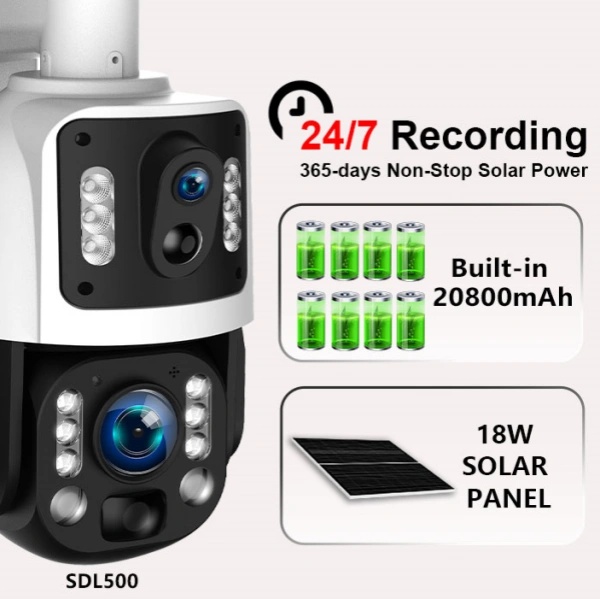
Comparing Traditional Surveillance vs. Industrial 4G Solar Solutions
When selecting a monitoring strategy for oil and gas assets, it is important to understand the cost-benefit ratio of different technologies. Below is a comparison of traditional wired systems versus modern industrial solar-powered 4G solutions.
| Feature | Traditional Wired CCTV | Industrial 4G Solar Camera |
|---|---|---|
| Installation Cost | Extremely High (Trenching/Wiring) | Low (Rapid Deployment) |
| Power Source | Grid Power (Unreliable in Remote Areas) | Solar + High-Capacity Battery |
| Connectivity | Fiber Optic or Local WiFi | 4G LTE / Satellite Compatible |
| Maintenance | Frequent Cable Repair | Minimal (Modular Swaps) |
| Scalability | Difficult and Rigid | Extremely Flexible |
For large-scale projects, the flexibility of wireless outdoor security cameras allows for the creation of a “virtual fence” along the pipeline. This modularity means that if a new section of the pipeline is constructed, the security perimeter can be extended in a matter of hours, rather than weeks of civil engineering work.
Advanced Detection: PIR vs. Radar in Pipeline Security
False alarms are the enemy of remote monitoring. In an oil field or pipeline corridor, wind-blown debris, wildlife, and heat haze can trigger standard motion sensors, leading to “alert fatigue” for security personnel. To combat this, we integrate Dual-Detection Technology.
By combining Passive Infrared (PIR) sensors with Microwave Radar, the camera only wakes up and sends an alert when it detects both a thermal signature and physical movement. This significantly reduces false positives. For high-security zones, using a long-range solar security camera with AI-humanoid detection ensures that you are only notified when an actual person or vehicle approaches the restricted area.
In addition to detection, night vision is a critical component. We utilize Smart Dual-Light systems. These systems use invisible infrared light for covert monitoring but can switch to high-intensity white floodlights if an intruder is detected. This not only captures full-color evidence but also serves as an immediate visual deterrent to potential vandals.
Case Study: Securing a 500-Mile Pipeline in a High-Heat Environment
The Problem: A national energy provider was losing thousands of dollars daily due to illegal tapping along a 500-mile pipeline section. The area was a desert environment with daytime temperatures exceeding 50°C (122°F). Standard cameras were overheating, and there was no way to run power lines across the sand dunes.
The Solution: We deployed an array of industrial-grade 4G solar cameras equipped with high-temperature resistant LiFePO4 batteries and specialized heat-shielded enclosures. Each unit was outfitted with a 40W solar panel to ensure maximum charging even during shorter winter days.
The Result: Within the first month, the system identified three unauthorized breach attempts. Because the cameras used low-power consumption technology, they maintained 100% uptime despite several days of sandstorms that partially obscured the solar panels. The company reported a 90% reduction in fuel theft within the first quarter.
Maintenance and Troubleshooting for Remote Deployments
Even the best hardware requires a maintenance strategy when deployed in extreme environments. Based on my experience in the field, here is a checklist for ensuring long-term reliability of your pipeline monitoring system:
- Solar Panel Cleaning: In deserts or industrial zones, dust accumulation can reduce solar efficiency by up to 30%. Implement a bi-annual cleaning schedule.
- BMS Health Checks: Use remote monitoring apps to check the battery voltage and discharge cycles. This allows you to predict battery failure before the unit goes offline.
- Firmware Updates: Ensure your battery powered security camera manufacturer supports Over-The-Air (OTA) updates to patch security vulnerabilities and optimize power usage.
- Signal Strength Optimization: If a unit shows intermittent connectivity, consider upgrading to a high-gain external Yagi antenna to stabilize the 4G link.
For more detailed technical guides on maintaining these systems, you can explore our resources on what is a low power camera and how it affects long-term deployment stability.
Future Trends: AI and Satellite Integration
The future of pipeline monitoring lies in the integration of Edge AI and LEO (Low Earth Orbit) satellite connectivity. While 4G is the current standard, satellite links like Starlink are beginning to provide a backup for areas with zero cellular coverage. This ensures that even the most isolated valve stations remain under constant watch.
Furthermore, the shift toward 24/7 full-time recording solar cameras is gaining momentum. Previously, solar cameras were limited to “event-based” recording to save power. However, with improvements in panel efficiency and battery density, we are now seeing the rise of 2025 market-ready solar cameras capable of continuous recording, providing a complete historical record of pipeline activity.
Summary of Key Requirements for Pipeline Monitoring
When sourcing equipment for oil and gas projects, engineering specifications must take precedence over price. A cheap camera that fails in a remote location costs five times its price in labor and transportation for a single repair trip.
- Durability: IP66 or IP67 waterproof and dustproof rating.
- Autonomy: Ability to operate for at least 4 days without sunlight.
- Intelligence: AI-driven detection to minimize false alarms and save bandwidth.
- Connectivity: Industrial-grade 4G modules with multi-carrier support.
By choosing the right technology partner and focusing on industrial-grade specifications, energy companies can significantly reduce their operational risks. If you are looking for a reliable battery powered security camera supplier to support your next large-scale infrastructure project, prioritize those who understand the nuances of extreme environment engineering.
For more information on specialized monitoring solutions, including those for smart agriculture or construction site security, visit our comprehensive resource library to see how 4G solar technology is revolutionizing remote surveillance across every industry.