
The Challenge of Finding a Reliable 4G Camera Supplier in a Crowded Market
For B2B buyers, sourcing 4G solar security cameras is often a journey of trial and error. Whether you are a 4G operator in Europe or a construction site security provider in North America, the pain points remain consistent: inconsistent signal stability, high return rates due to battery failure, and the nightmare of local certification compliance. Most suppliers in the market offer generic models that look identical but perform poorly under real-world conditions.
Reliability in the 4G security sector isn’t just a marketing buzzword; it is the foundation of your business reputation. When a camera fails in a remote location, the cost of the “truck roll” to fix it often exceeds the price of the camera itself. This is why finding a professional manufacturer that understands the nuances of global cellular bands and power management is critical for long-term profitability.
As an engineer with over 13 years in the field, I have seen countless projects fail because the chosen hardware couldn’t handle the complexities of fluctuating 4G signals or the harsh realities of off-grid power management. Our mission at UBOXCAM is to bridge this gap by providing hardware that is not only technically superior but also ready for immediate global deployment.
Why 4G Connectivity is the Most Common Point of Failure
Understanding what is a 4G security camera and how it differs from traditional WiFi models is the first step in successful procurement. The primary technical hurdle is band compatibility. A camera designed for the Chinese domestic market will rarely perform optimally in the UK or the USA because the frequency bands (such as B2, B4, B12 for the US or B1, B3, B7, B20 for Europe) vary significantly.
Moreover, the 4G module’s power consumption is significantly higher than WiFi modules. Without a sophisticated Battery Management System (BMS), a few cloudy days can lead to a “dead” camera that requires a manual reset. This is a common complaint from Amazon sellers and installers who deal with disgruntled end-users.
To solve this, we have engineered the SDL500 series with a focus on high-gain antennas and low-power consumption protocols. By optimizing the “heartbeat” interval of the 4G module, we ensure the camera stays online while consuming minimal energy, a core requirement for wireless outdoor security cameras in remote areas.
SDL500: Engineered for Global Compliance and Stability
The SDL500 is not just another camera; it is a specialized tool designed for international markets. We have invested heavily in global certifications to ensure that our partners can import and sell these units without legal or technical friction. Whether it is CE, FCC, or RoHS, the SDL500 meets the stringent requirements of the world’s most demanding markets.
One of the standout features of this model is its “Plug-and-Play” 4G capability. We use premium modules from top-tier providers like Quectel, which are pre-configured to recognize over 500 global carriers. This reduces the setup time for your customers and minimizes technical support tickets. For wholesalers and brand owners, this means a faster inventory turnover and higher customer satisfaction.
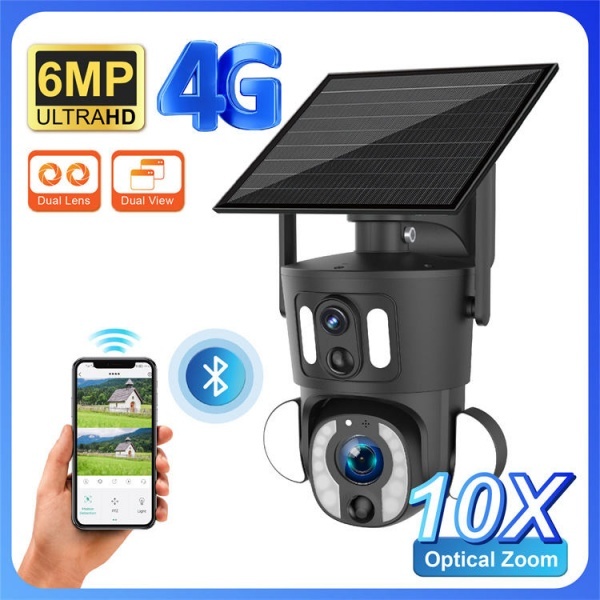
Technical Comparison: SDL500 vs. Standard Market Alternatives
To help you understand the engineering depth of our products, let’s look at a side-by-side comparison of the SDL500 against common “budget” 4G cameras found on major wholesale platforms.
| Feature | Standard 4G Camera | UBOXCAM SDL500 |
|---|---|---|
| 4G Module | Low-cost, generic bands | Global Multi-Band (Quectel/Simcom) |
| Power Management | Basic protection circuit | Advanced BMS with Low-Temp Protection |
| Antenna Design | Internal, low gain | Dual External 5dBi High-Gain Antennas |
| Night Vision | Standard IR only | Smart Dual-Light (Full Color + IR) |
| Certification | Lacking or forged | Full Global Certification (CE/FCC/RoHS) |
The Importance of BMS in 4G Solar Camera Design
If you have ever had a customer complain that their camera “died” in winter and never woke up, you have experienced a failure in power management. The BMS (Battery Management System) is the most overlooked component in solar camera production. It controls the charging cycle, prevents over-discharge, and—most importantly—manages temperature-related issues.
In cold climates like Canada or Germany, lithium batteries cannot be safely charged below 0°C without specialized circuitry. Our SDL500 includes advanced thermal sensors that pause charging during extreme cold while still allowing the camera to operate from stored energy, preventing permanent battery damage. This level of detail is why our battery-powered security cameras outperform competitors in professional environments.
Case Study: Securing a Multi-State Construction Project
The Problem: A large construction firm in the US needed to monitor 15 different sites across three states. Traditional wired systems were too expensive to install for temporary use, and standard WiFi cameras were useless due to the lack of internet infrastructure. Previous 4G cameras they tested frequently dropped offline during peak data hours.
The Solution: We supplied 100 units of our professional building site security cameras. These units were pre-fitted with US-specific 4G bands and high-capacity solar panels. We utilized our SDL500 technology to ensure consistent connectivity even in low-signal areas.
The Result: The firm reduced site theft by 40% and saved over $50,000 in monthly security guard costs. Because our units are “ready to ship” and have global certifications, we were able to fulfill the order within 7 days, allowing the project to stay on schedule.
Troubleshooting Common 4G Camera Issues
As an engineer, I believe in empowering our partners with the knowledge to solve problems quickly. Here are the most common 4G camera issues and how our SDL500 addresses them:
- Issue: The camera won’t connect to the network.
- Cause: Incorrect APN settings or mismatched bands.
- Solution: Our SDL500 features auto-APN identification, which automatically configures the network settings for 95% of global carriers.
- Issue: Excessive data consumption.
- Cause: Poor firmware optimization or high false-alarm rates.
- Solution: We use advanced PIR (Passive Infrared) and AI Humanoid detection to ensure the camera only transmits video when actual motion is detected, saving up to 60% on data costs.
- Issue: Battery drains too fast at night.
- Cause: Power-hungry IR LEDs or unstable 4G signal causing constant reconnection.
- Solution: The SDL500 uses high-efficiency Smart Dual-Light technology and a low-power “Keep-Alive” mode to maintain connectivity without draining the battery.
Market Outlook: Why 2025 is the Year for 4G Solar Cameras
The 2025 solar security camera market is moving toward high-autonomy systems. With the global rollout of 5G causing many 2G and 3G networks to shut down, the demand for stable, LTE-based 4G cameras is skyrocketing. Industries such as smart agriculture, logistics, and emergency management are all looking for rapid-deployment solutions.
For entrepreneurs and brand owners, this represents a “Blue Ocean” opportunity. By offering a product like the SDL500, which solves the reliability issues of the past, you can position your brand as a premium provider in a market tired of cheap, unreliable alternatives. Whether you are targeting smart agriculture or municipal infrastructure, the key is hardware stability.
Practical Checklist for Sourcing a 4G Camera Factory
Before you commit to a long-term supplier, use this checklist to ensure they can meet your B2B requirements:
- Band Verification: Does the supplier provide a band chart specifically for your target region?
- Certification Authenticity: Can they provide verifiable CE/FCC/RoHS test reports?
- Stock Availability: Do they carry bulk stock of core models like the SDL500 to support your growth?
- Technical Support: Do you have direct access to engineers, or just a sales representative?
- Customization Options: Can they handle OEM/ODM requests such as custom app branding or unique hardware modifications?
At UBOXCAM, we pride ourselves on checking all these boxes. We are not just a factory; we are a strategic partner for your security business. Our SDL500 is currently in stock and ready for global shipping, ensuring you can meet your project deadlines without the typical 30-45 day lead times of other manufacturers.
Summary of Key Takeaways
- Stability is King: 4G cameras must have region-specific bands and high-gain antennas to be reliable.
- Power Matters: An advanced BMS is essential for cold-weather performance and battery longevity.
- Certification Saves Money: Importing certified products reduces legal risks and customs delays.
- Ready Stock: Choosing a supplier with bulk stock allows for faster market entry and better cash flow.
If you are ready to upgrade your product lineup or secure your next major project with the SDL500, contact our engineering team today. We provide the technical depth and production capacity to help your business scale in the competitive world of solar security.