
City Management Revolution: Using Mobile 4G Solar Cameras as Electronic Police for Illegal Parking and Dumping
Urban management is increasingly becoming a high-stakes logistics challenge. As cities expand, traditional fixed-line surveillance reaches its financial and physical limits. For municipal departments, the two most persistent headaches are illegal parking in restricted zones and illegal waste dumping (fly-tipping) in suburban or blind-spot areas. Installing traditional fiber-optic cameras in these locations is often cost-prohibitive due to the massive investment required for trenching, wiring, and power grid integration.
As an engineer with 13 years in solar security design, I have seen how the shift toward autonomous, “off-grid” surveillance has changed the landscape for B2B municipal projects. The modern “Mobile Electronic Police” is no longer a squad of officers, but a network of 4G solar-powered PTZ cameras. These devices provide the flexibility to move monitoring hotspots as urban needs change, ensuring that no corner of the city remains a law enforcement vacuum.
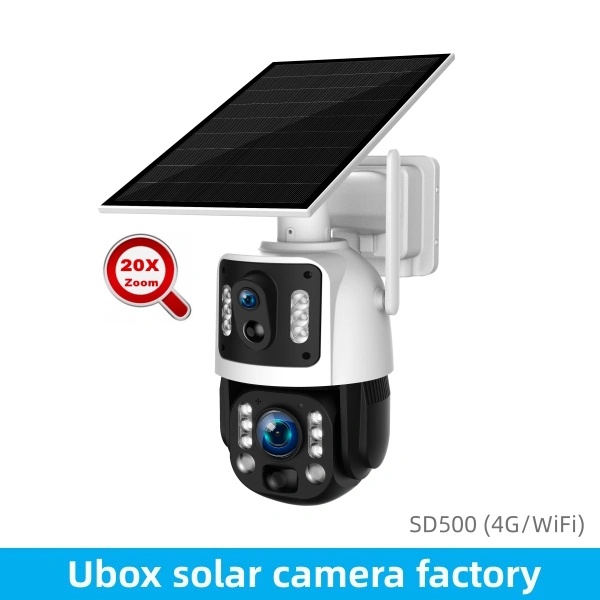
The Technical Edge: Why Solar 4G Cameras are the Ideal “Mobile Police”
The core advantage of a solar powered security camera in city management is its total independence. Traditional cameras are tethered to the grid; if a city manager identifies a new illegal dumping site, it could take weeks or months to get a fixed camera permit and installation. A 4G solar unit, however, can be mounted on a light pole or temporary tripod in under 30 minutes.
From a technical standpoint, the reliability of these units hinges on two factors: the Battery Management System (BMS) and the 4G transmission stability. In our factory, we emphasize the BMS protection technology. This ensures that the Lithium-ion batteries can withstand the extreme temperature fluctuations found in urban environments—from the heat reflected off asphalt to freezing winter nights—ensuring the “Electronic Police” never goes off-duty.
Furthermore, the integration of 4G modules allows these cameras to operate where Wi-Fi is non-existent. For city managers, this means the ability to deploy units in construction sites, park entrances, and highway exits without worrying about network infrastructure. For more details on these capabilities, you can explore our guide on solar cameras in municipal projects.
Addressing Illegal Parking: Real-Time Intervention and Evidence Collection
Illegal parking disrupts traffic flow and creates safety hazards, especially in emergency lanes or fire hydrants zones. Traditional methods rely on manual patrols or expensive sensor-embedded curbs. A siren and flash light alarm solar camera serves as both a deterrent and an enforcement tool. When a vehicle enters a “no-parking” zone, the camera’s AI human and vehicle detection triggers an immediate response.
First, the camera can issue a voice warning: “Illegal parking detected, please move your vehicle immediately.” Simultaneously, it captures high-definition images of the license plate and sends a real-time push notification to the city management command center. This proactive approach reduces the need for physical towing while maintaining a high rate of compliance. The low-latency 4G connection ensures that high-resolution evidence is uploaded to the cloud before the offender can even drive away.
Stopping Illegal Dumping: Monitoring Remote Hotspots
Illegal waste dumping often happens under the cover of darkness in areas where power lines don’t reach. This is where advanced night vision technology becomes critical. Municipalities need more than just a grainy image; they need identifiable evidence of faces and vehicle markings in pitch-black conditions.
Our dual-lens solar cameras utilize starlight sensors and smart dual-light systems. When the camera detects movement in a restricted area, it can switch from infrared to full-color mode using localized white LED floodlights. This not only captures the necessary evidence but often scares off the individuals attempting to dump waste. This strategy is highly effective for environmental monitoring and protection in suburban fringes.
Core Comparison: Traditional CCTV vs. Mobile Solar 4G Cameras
| Feature | Traditional Fixed CCTV | Mobile 4G Solar Camera |
|---|---|---|
| Deployment Time | Days to Weeks (Trenching/Wiring) | 30 – 60 Minutes |
| Power Source | AC Grid Power (Susceptible to cuts) | 100% Solar + Internal Battery |
| Installation Cost | High (Labor + Infrastructure) | Low (Plug-and-play) |
| Flexibility | Fixed Location | Highly Mobile / Relocatable |
| Network | Fiber Optic / Hardwired | 4G LTE / 5G Wireless |
Case Study: Reducing Illegal Dumping in a Suburban District
Problem: A district in a major North American city was spending over $200,000 annually on cleaning up illegal construction debris and household waste dumped in “blind spots” near forest edges.
Solution: The city council deployed ten long range wireless cameras equipped with 4G modules and 60W solar panels. These units were moved every two months to different suspected dumping sites based on intelligence data. The cameras used PIR + Radar dual-detection to minimize false alarms from wildlife while ensuring 100% capture of human activity.
Result: Within the first six months, illegal dumping incidents dropped by 70%. The city was able to issue 45 high-fine citations based on clear license plate evidence captured by the cameras. The ROI was achieved in less than four months by saving on cleanup labor costs alone. This demonstrates the power of rapid deployment security in dynamic urban environments.
Troubleshooting & Maintenance for Municipal Deployments
Operating a fleet of mobile “Electronic Police” units requires a focused maintenance strategy to ensure 99.9% uptime. Based on our engineering experience, here are the most common challenges and their solutions:
- Issue: Camera goes offline during consecutive rainy days.
- Solution: Ensure the camera supports low power consumption modes. Check that the solar panel is angled at the optimal degree for the local latitude to maximize solar intake even in overcast conditions.
- Issue: Excessive false alarms from moving tree branches or shadows.
- Solution: Use cameras with adjustable AI detection zones. Our Ubox-based systems allow users to exclude specific areas of the frame from triggering alerts.
- Issue: 4G signal instability in high-density urban canyons.
- Solution: Utilize high-gain external 4G antennas. For professional projects, we recommend dual-SIM failover options to switch between different telecom providers.
Selection Checklist for City Management Projects
When choosing a battery powered security camera manufacturer for city-scale deployment, B2B buyers should look for the following specifications:
- Optical Zoom: At least 10x to 20x optical zoom is necessary to identify license plates from a distance without losing image quality.
- BMS Reliability: Ensure the battery pack has overcharge, over-discharge, and short-circuit protection.
- Data Security: Municipalities require AES-128 or higher encryption for all transmitted video data to prevent hacking.
- Enclosure Rating: IP66 or IP67 is mandatory to protect against high-pressure water jets and urban dust.
- Cloud Integration: The ability to integrate with existing city “Smart City” dashboards via ONVIF or API.
As the “Electronic Police” concept evolves, we see a trend toward integration with AI-driven traffic analysis and automated ticketing systems. By investing in high-quality wireless outdoor security cameras, city managers can significantly reduce operational costs while improving the quality of life for residents.
For engineering firms and government contractors, choosing the right hardware partner is the first step. Our factory provides the customization and technical support needed to win and execute these critical municipal contracts. Explore our full range of 2025 solar camera market solutions to stay ahead of the curve.
Key Takeaways for Municipal Security
- Flexibility: Mobile solar cameras allow for dynamic enforcement in shifting urban hotspots.
- Cost Efficiency: Eliminates the need for grid connection and expensive infrastructure work.
- Proactive Deterrence: Integrated sirens and light alarms stop crimes before they happen.
- High ROI: Significant savings in cleanup costs and manual patrol labor.
If you are a wholesaler or an engineering installer looking for reliable, factory-direct solar security solutions for city management projects, contact us at UBOXCAM. We specialize in providing the technical depth and production capacity required for large-scale government and B2B deployments.