
SDL500: Reliable 4G Security for the Longest Rainy Seasons
For project managers and infrastructure contractors operating in high-latitude regions or tropical rainforest climates, the greatest enemy is not theft or vandalism—it is the unpredictable weather. Standard solar security cameras often fail during extended periods of low sunlight, leading to battery depletion and costly system downtime. At UBOXCAM, our 13 years of engineering experience have shown us that a “one-size-fits-all” approach to power management is insufficient for professional-grade off-grid security.
The SDL500 was specifically engineered to bridge this gap. By focusing on high-density energy storage and advanced charging kinetics, this long-range solar security camera supplier solution ensures that your surveillance remains active even when the sun refuses to shine for weeks on end. If you are dealing with critical site security, understanding the technical backbone of the SDL500 is the first step to eliminating the “blind spot” problem caused by power failure.
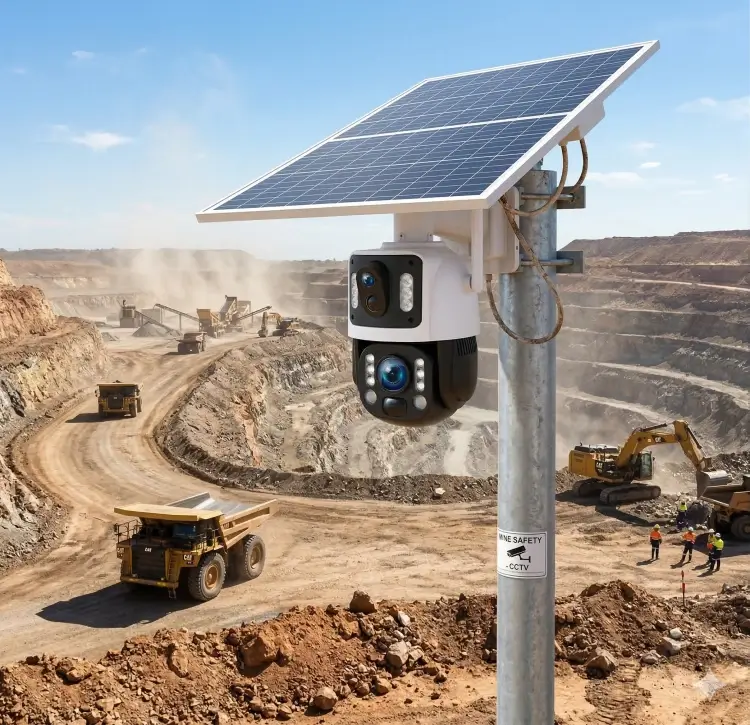
20Ah High-Density Battery: The Heart of the SDL500
The power architecture of the SDL500 is built around a robust 20Ah high-density lithium-ion battery pack. Unlike consumer-grade cameras that rely on smaller internal batteries, the SDL500 utilizes an array of 8 high-quality 18650 cells. This massive capacity serves as a buffer, ensuring the system can sustain operation through significant intervals of low solar irradiance.
What truly sets this system apart is our proprietary low-power management circuit. By optimizing the deep-sleep mode, the camera maintains a standby power consumption as low as 0.003W. This is critical for businesses looking for what is a low power camera and how it impacts long-term site reliability. The system stays dormant yet ready, waking up in milliseconds to record events while preserving the integrity of the power cycle.
| Feature | Standard Solar Camera | SDL500 Professional Series |
|---|---|---|
| Battery Capacity | 5Ah – 10Ah | 20Ah (8x 18650 cells) |
| Standby Consumption | 0.05W – 0.1W | 0.003W |
| Rainy Day Autonomy | 1-3 Days | 15-20 Days (depending on activity) |
18W Monocrystalline Folding Panel: Efficiency in Low Light
In regions where clouds are the constant norm, the physical size and efficiency of the solar panel dictate the survival of the device. The SDL500 features an 18W monocrystalline folding solar panel. The folding design serves a dual purpose: it maximizes the capture surface area during the day and optimizes shipping volume for large-scale logistics.
Monocrystalline silicon outperforms polycrystalline variants in diffuse light conditions—exactly the type of light prevalent on overcast days. Our engineers have fine-tuned the Maximum Power Point Tracking (MPPT) charging controller within the SDL500 to ensure that even a weak light harvest is efficiently converted and stored. This technology is vital for securing critical infrastructure where physical intervention is impossible.
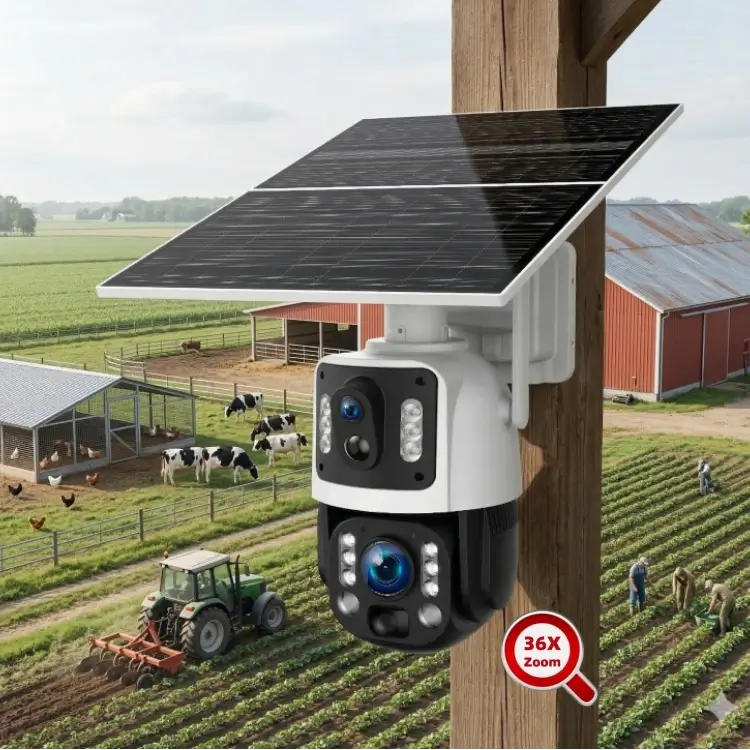
Case Study: Reliable Performance in Extreme Climates
We recently deployed the SDL500 in two vastly different environments to test its thermal and power resilience. In Northern Norway, during the mid-winter transition, temperatures consistently dropped to -20°C. Cold weather typically causes chemical energy transfer in lithium batteries to drop; however, the internal insulation and specialized BMS (Battery Management System) of the SDL500 successfully prevented voltage sag, keeping the unit online for the duration of the pilot project.
Conversely, in the monsoon-heavy regions of Thailand, where heavy cloud cover persists for weeks, the SDL500 maintained a 98% uptime rate. By utilizing the sirenflash light alarm solar security camera provider protocol, we were able to provide security while keeping the system in low-power mode, only triggering high-energy consumption features like white light and siren when human presence was detected.
Key Deployment Considerations for Rainy Climates:
- Placement Angle: Even in low light, ensure the panel faces the equator (South in the Northern Hemisphere) to capture maximum diffuse light.
- Motion Sensitivity: During extreme weather, reduce motion detection sensitivity to avoid false alerts triggered by heavy rain or swaying trees.
- Maintenance Cycles: Clean the panel surface every 3 months to ensure maximum light permeability, especially in dusty or wet environments.
If you are a contractor, distributor, or systems integrator looking for a solution that can withstand the harshest environmental challenges, the SDL500 offers the durability your reputation depends on. Don’t let unpredictable weather compromise your site security. Contact our engineering team today for a customized power budget analysis based on the specific climate and requirements of your target market or project location.