
High-Capacity 20000mAh Battery Solar Camera for Extreme Weather
For professional security installers and project managers, the greatest fear isn’t a hardware failure—it is the dreaded “offline” notification caused by consecutive days of rain or extreme cold. In regions like Northern Europe or tropical rainforests, maintaining a constant power supply for long-range solar security cameras is the ultimate engineering challenge. When the sun disappears, the reliability of your surveillance system depends entirely on its battery architecture and energy-harvesting efficiency.
As an engineer with over 13 years of experience in solar-powered surveillance, I have seen too many deployments fail because they relied on standard consumer-grade battery modules. Today, we look at why a 20000mAh high-density configuration is the industry standard for industrial-grade, off-grid monitoring.
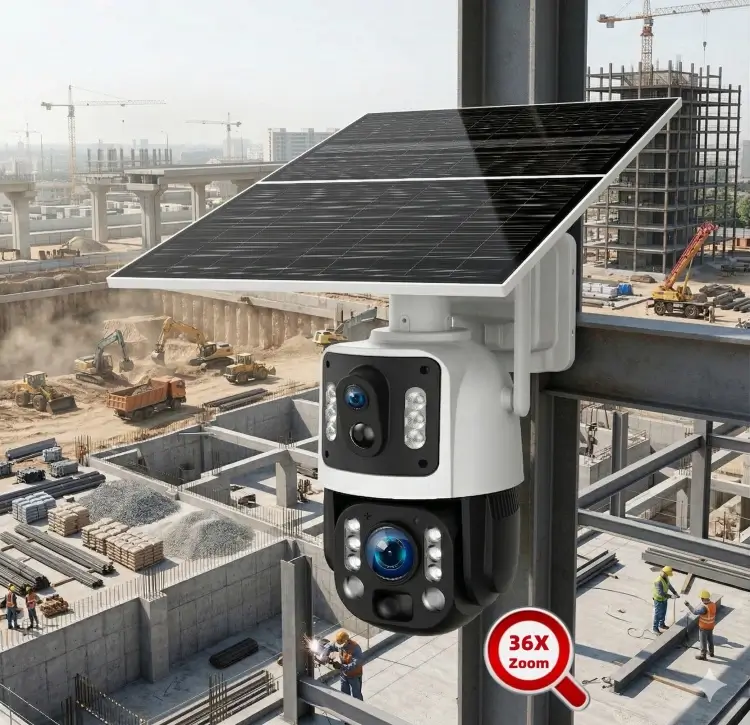
20Ah High-Density Battery: The Heart of the SDL500
The core of our high-reliability camera system is the 20000mAh battery array. To achieve this, we utilize 8 high-grade 18650 lithium-ion cells configured for maximum power density and thermal stability. Unlike generic battery-powered security cameras that suffer from rapid capacity drops, our BMS (Battery Management System) is specifically tuned for low-power operation.
The system is engineered for a ultra-low standby power consumption of just 0.003W. This is critical because, in poor weather conditions, the camera spends the majority of its life in “sleep mode.” By minimizing the quiescent current, we ensure that even during 10-15 days of zero direct sunlight, the system remains responsive, triggering instantly upon motion detection or remote user access.
18W Monocrystalline Foldable Panel: Charging Efficiency Redefined
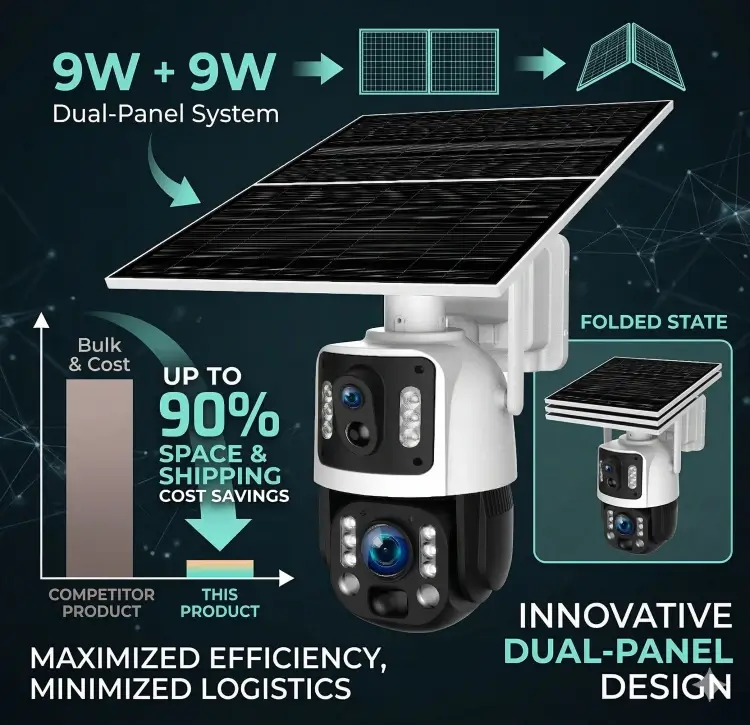
Energy capture is just as important as energy storage. Standard cameras often use small, fixed 5W or 6W panels that struggle to keep up in overcast conditions. Our 18W high-efficiency monocrystalline foldable panel is a game-changer for construction site security cameras.
The foldable design serves two purposes: logistical efficiency and surface area maximization. By expanding the panel, we provide a significantly larger surface for light harvesting, which is vital when the solar irradiance is low. Compared to traditional panels, this design captures diffuse light much more effectively, ensuring the battery reaches full charge during short daylight windows.
| Feature | Standard Consumer Camera | Industrial SDL500 Series |
|---|---|---|
| Battery Capacity | 5000mAh – 10000mAh | 20000mAh |
| Solar Panel Power | 5W – 6W | 18W Foldable |
| Standby Power | 0.01W – 0.05W | 0.003W |
| Weather Resilience | Moderate | Extreme (-20°C to 60°C) |
Case Study: Performance in Extreme Environments
How does this system perform in the real world? Consider two distinct scenarios:
- Norway Winter (The Cold Stress Test): Lithium batteries usually struggle at low temperatures. Our off-grid deployment strategy includes internal thermal insulation and a customized charge-cut-off protocol to protect battery health at -20°C. By leveraging the large 20Ah buffer, the system maintains enough voltage to operate the 4G module and video encoder without shutting down.
- Thailand Rainy Season (The Low-Light Challenge): During weeks of constant cloud cover, the 18W panel’s high sensitivity to low-spectrum light ensures that the system gains enough “trickle charge” to offset the daily consumption. The result is 99.9% uptime, even when the sun is rarely visible.
Expert Checklist for Selecting Extreme Weather Cameras
When you are sourcing or deploying cameras for sensitive projects, keep these technical requirements in mind:
- Verify the BMS: Ensure the manufacturer provides data on how the battery handles sub-zero temperatures.
- Check Panel Specs: Don’t settle for anything less than 15W for 4G-enabled units; the power drain of cellular connectivity is significant.
- Duty Cycle Analysis: Calculate the average motion triggers per day. If a site is highly active, you must balance high-capacity batteries with active sleep scheduling.
Are you currently struggling with power failures in your surveillance projects? Whether you are monitoring building sites, oil fields, or remote wildlife protection zones, our engineering team can provide a tailored power-budget analysis. Contact our technical sales team today to discuss how we can customize an energy solution for your specific climate and application requirements.