
Winter-Optimized Solar PTZ: 20Ah Battery for Non-Stop Protection
In regions with high latitudes or tropical climates, traditional solar security systems often fall short. Engineers and project managers frequently report the same critical failure: the “blackout period” caused by consecutive rainy days or the reduced sunlight hours of winter. When a long-range solar security camera goes offline due to power exhaustion, the security vulnerability is absolute. As a professional manufacturer with over 13 years in the field, I have designed our latest PTZ systems specifically to bridge this gap, ensuring continuous surveillance even when the elements work against you.
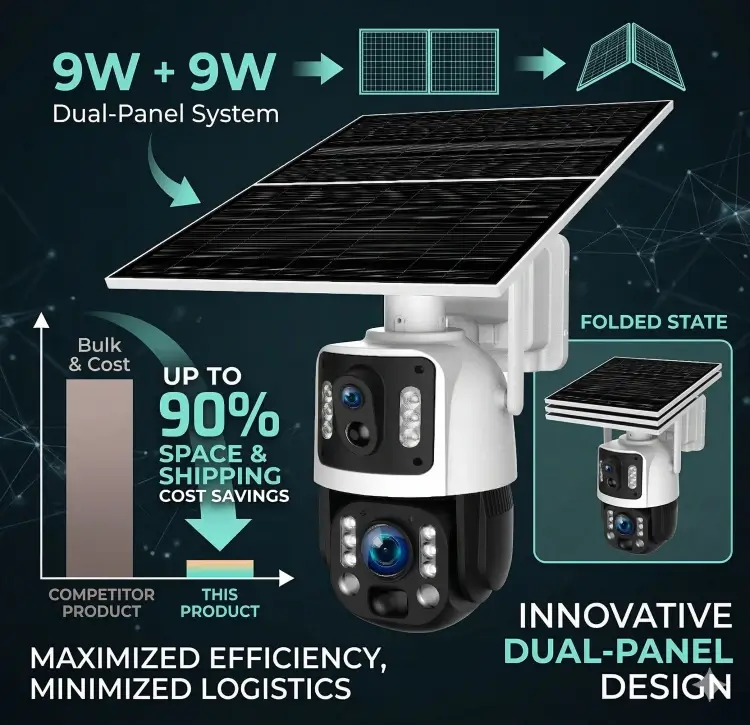
20Ah High-Density Battery: The Heart of the SDL500
The primary reason for system failure in low-light conditions is insufficient energy storage. Most market-standard cameras rely on limited internal batteries that cannot bridge the gap of a week without direct solar charging. Our SDL500 series integrates an industry-leading 20Ah high-density battery pack, comprised of 8 high-performance 18650 cells. This capacity isn’t just about raw power; it is about architecture.
By leveraging an advanced BMS (Battery Management System), we ensure that power discharge is optimized for longevity. The device maintains a micro-power consumption state of 0.003W during standby. When motion is detected, the system wakes up in under 0.5 seconds, ensuring no critical footage is lost. This combination of massive energy reserves and ultra-low power consumption effectively prevents “power starvation,” allowing the camera to function for up to 30 days even if the solar panel receives zero input.
18W Monocrystalline Foldable Panel: Efficiency in Weak Light
Charging efficiency is the secondary pillar of reliable off-grid security. Many entry-level cameras use standard thin-film panels that struggle to generate a charge during overcast days. We utilize an 18W monocrystalline silicon solar panel, chosen specifically for its superior electron mobility in diffuse lighting conditions.
The innovative foldable design serves two purposes. First, it optimizes logistics by reducing shipping volume. Second, it provides a larger surface area for photon absorption compared to traditional fixed panels of the same footprint. Even in cloudy environments, our panel maintains a trickle charge high enough to offset the system’s standby consumption, preventing the battery from hitting a critical depth of discharge.
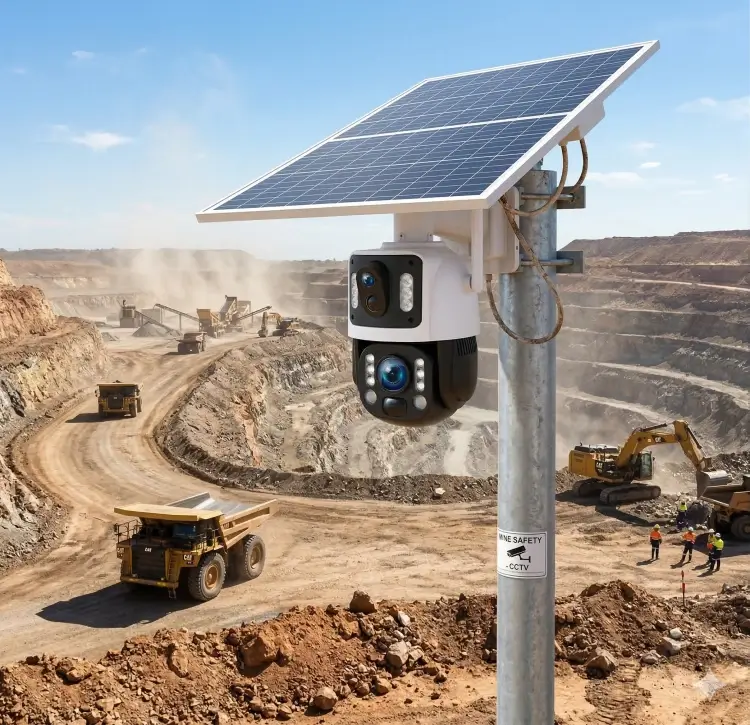
Performance Comparison: Standard vs. Winter-Optimized Systems
To understand the leap in reliability, refer to the performance metrics below:
| Feature | Standard Solar Camera | Our 20Ah Winter-Optimized PTZ |
|---|---|---|
| Battery Capacity | 6Ah – 10Ah | 20Ah (8 x 18650 cells) |
| Standby Power | 0.01W – 0.05W | 0.003W (Ultra-low) |
| Panel Power | 5W – 8W | 18W Monocrystalline |
| Operating Temp | -10°C to 45°C | -20°C to 60°C |
Case Study: Reliable Operations in Norway and Thailand
We recently deployed a batch of these units in two distinct, high-stress environments. In Norway, our clients faced the challenge of “Polar Night” conditions, where sunlight is scarce and temperatures drop below -20°C. Our specialized battery heating control module allowed the cells to maintain efficiency despite the extreme cold, keeping the site secure during the darkest months of the year.
Conversely, in the tropical monsoon regions of Thailand, the challenge was high humidity and weeks of consecutive rainfall. The 18W high-efficiency panel ensured that even in dim, overcast daylight, the system captured enough solar energy to keep the 20Ah battery above the threshold. These real-world applications prove that our construction site security cameras and similar industrial units are built to survive where others fail.
Troubleshooting & Maintenance Tips
Even the most robust systems require proper setup to ensure maximum uptime. Follow these guidelines to maintain your deployment:
- Angle Adjustment: In high-latitude regions, tilt your panel at an angle of (Latitude + 15°) to maximize exposure to the low winter sun.
- Cleaning Cycle: In dusty or snowy environments, a quarterly wipe-down of the solar panel surface is critical to maintain 100% conversion efficiency.
- BMS Health: Always check your BMS status through the management app to ensure the battery cells are balanced.
If you are planning a deployment in a challenging climate or need a specific configuration for a high-value asset, our engineering team is ready to assist. We specialize in providing customized solar security solutions for global infrastructure, mining, and telecommunications projects. Contact us today to discuss your site-specific requirements and receive a tailored technical proposal that guarantees non-stop protection.